
The UK Government has announced funding of £1 Million to explore the feasibility of re-establishing Golden Eagles in England.
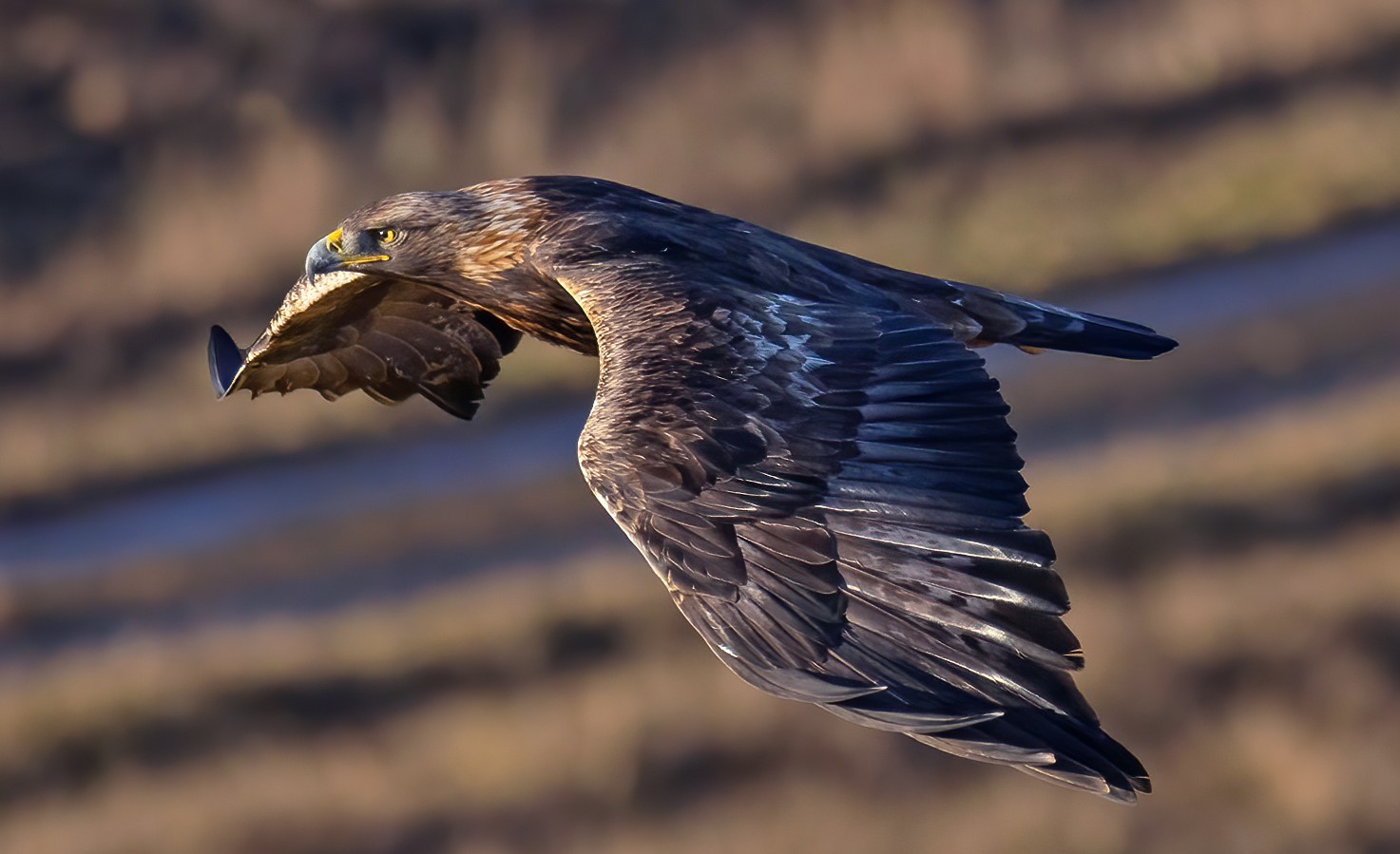
Here is the Government’s press release (issued today), followed by my commentary.
ICONIC GOLDEN EAGLES TO MAKE COMEBACK IN ENGLAND
Environment Secretary approves additional £1m of government funding to explore the reintroduction of golden eagles, restoring hopes they will return to England
One of Britain’s most iconic birds, the golden eagle, is poised to make a return to England after more than 150 years after the Government paved the way for a recovery programme that could include reintroduction.
Once widespread across England and mentioned more than 40 times by Shakespeare, golden eagles were virtually wiped out by persecution during the Victorian era. Only a handful of pairs have been seen in England since and the last eagle died in the Lake District in 2016.
But a study published by Forestry England today confirms that England has the capacity to sustain golden eagle populations once more, with eight potential ‘recovery zones’, mostly in the north of England, identified as being the most suitable areas.
The Environment Secretary Emma Reynolds has welcomed the study’s findings and approved £1m of additional funding to explore a reintroduction programme with the potential for juveniles, six to eight weeks old, to be released as early as next year.
Environment Secretary Emma Reynolds said:
“This government is committed to protecting and restoring our most threatened native wildlife – and that includes bringing back iconic species like the golden eagle.
“Backed by £1m of government funding – we will work alongside partners and communities to make the golden eagle a feature of English landscapes once again“.
In Southern Scotland, golden eagle populations have recovered to record numbers thanks to the restoration efforts of the groundbreaking South of Scotland Golden Eagle Project. Satellite tracking indicates that some of these translocated birds have already begun to fly across the border and explore northern England. The funding announced today will help accelerate this re-establishment and, where appropriate, further reinforce it with targeted reintroductions. Replicating their successful collaborative approach in the south of Scotland, charity Restoring Upland Nature (RUN) will lead the pioneering project in partnership with a group of core partners, including Forestry England.
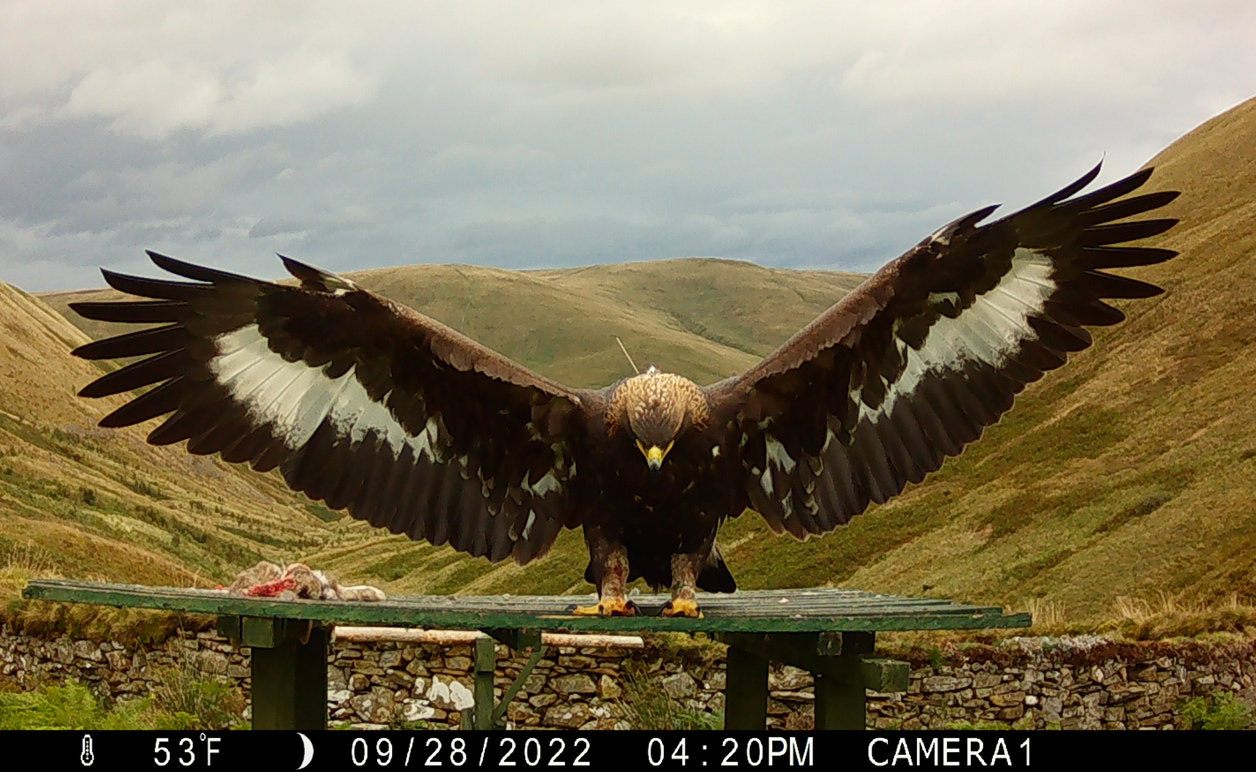
Aside from being Britain’s second largest bird of prey with an impressive 2-metre wingspan, the golden eagle is a keystone species that can play a vital role in nature recovery more widely. As an apex predator at the top of the food chain, golden eagles help to keep the whole ecosystem in balance.
Mike Seddon, Forestry England Chief Executive said:
“It is our ambition that the nation’s forests will become the most valuable places for wildlife to thrive and expand in England. And we know from our successful reintroduction projects that returning lost species is vital for nature recovery across landscapes.
“The detailed findings of our feasibility study will guide us with our partners, Restoring Upland Nature, to take the next steps to explore the recovery of golden eagles in northern England. This Defra funding means we can build on the good work we have begun, taking the time to build support and engage with local communities, landowners and land managers and conservation organisations“.
Dr Cat Barlow, Restoring Upland Nature Chief Executive said:
“This presents a truly exciting, and potentially game-changing moment for the return of golden eagles to Northern England. Our success to date is testament to the strength of collaborative working between conservationists, raptor study groups, gamekeepers and land managers, and to the incredible support of thousands of people across communities in southern Scotland.
“With the backing of Defra and Forestry England, we now have the opportunity to replicate and build on this approach in Northern England. Our priority will be to listen, to work in partnership, and to ensure that golden eagle recovery supports both nature and the people who manage these landscapes, so that everyone can enjoy the thrill of seeing golden eagles flying high once again across the uplands of the UK“.
Forestry England’s research suggests that Scottish birds could be seen across northern England within 10 years, but it will take longer for breeding golden eagles to become established in England.
With support from Forestry England, Restoring Upland Nature will now develop a programme of engagement with farming, game management, recreation, nature conservation, tourism and education interests in the region.
The move to explore reintroducing golden eagles is the latest milestone as the government’s works to achieve the statutory targets set out in the Environmental Improvement Plan to halt the decline in species abundance by 2030 and to reduce species extinction risk by 2042 against 2022 levels.
It follows the government’s landmark decision last year to allow the legal reintroduction of another keystone species, beavers, into the wild in England for the first time in hundreds of years, and a record £60m of funding announced last week to protect threatened native species.
ENDS
My commentary:
I’m pleased to see that the ecological research behind the proposal to restore Golden Eagles to England has been written by two of the leading scientific authorities on this species – Drs Phil Whitfield and Alan Fielding.
Their report showcases the depth and breadth of Golden Eagle research in the UK in recent decades, most of it led by them in collaboration with other species experts, and provides a detailed, evidence-based review of what is required for a successful reintroduction/reinforcement project.
The reports shows how eight Potential Recovery Zones (PRZs) were identified, with all but one of them located in northern England: Cheviots, North Pennines, Lakes, Yorkshire Dales, Bowland, South Pennines, North York Moors, South West.
The North York Moors and the South West PRZs were considered to be geographically isolated (in terms of eagle dispersal) whereas the other six PRZs were considered as a single spatial block and therefore more preferable.
These core areas were identified as having the potential to support an upper limit of 92 Golden Eagle home ranges, but was revised 45 when ‘subjectively considering potential risk factors’.
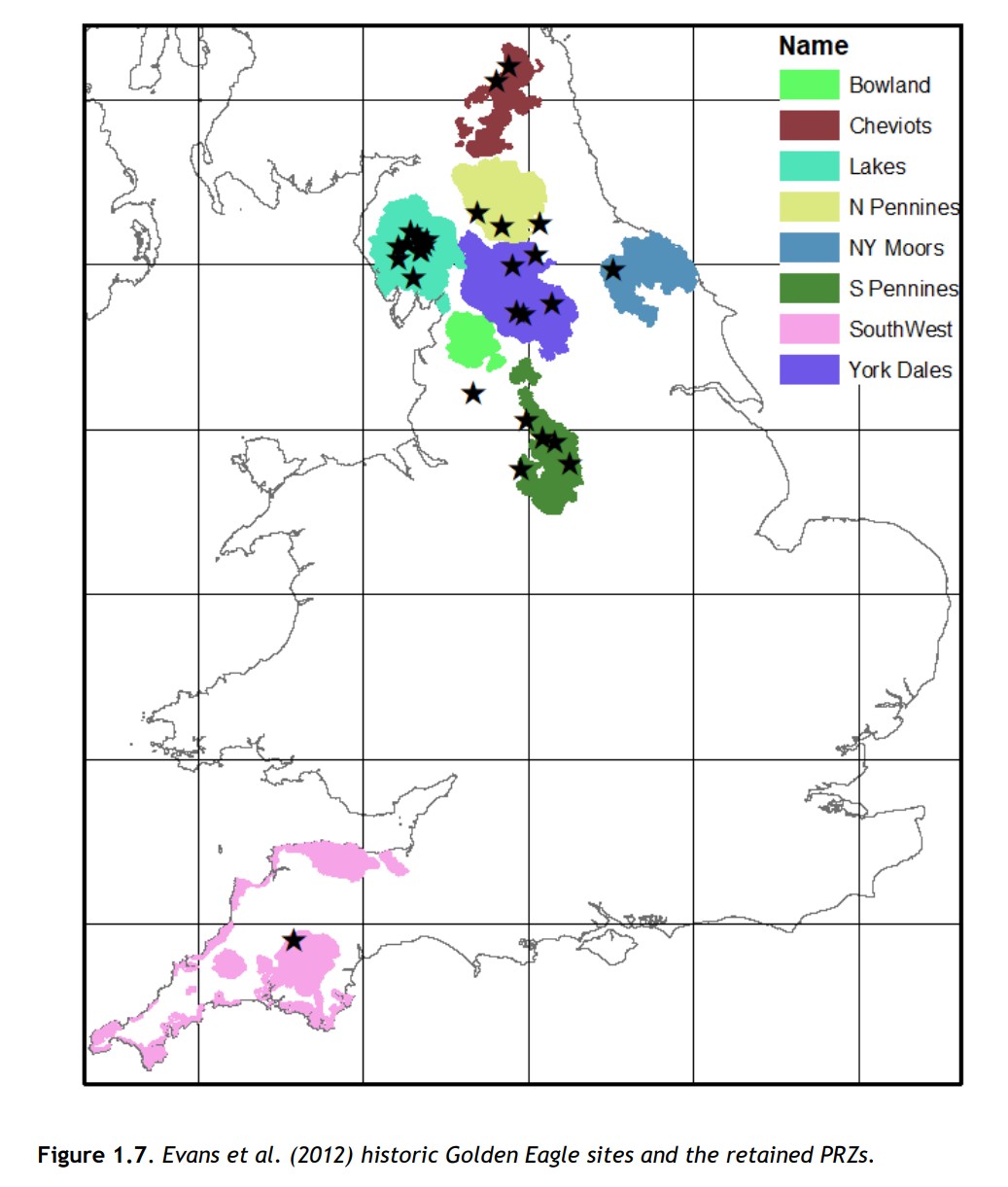
Those potential risk factors include constraints such as renewable energy infrastructure, weather (especially spring rainfall), unintentional disturbance, e.g. through recreation, and of course the big one, illegal persecution. The revised figure of 45 home ranges assumes ‘no intentional interference which prevents a home range from being established‘.
Looking at the map of the Potential Recovery Zones, regular blog readers will know immediately that illegal raptor persecution is systemic in those northern PRZs where driven grouse shooting remains a dominant land-use.
Given the population-level effects of illegal persecution in these areas on species such as the Hen Harrier and the Peregrine (e.g. see here and here), it’s not difficult to comprehend the challenge of keeping Golden Eagles alive for long enough to establish a home range on those driven grouse moors.
Whitfield and Fielding readily acknowledge this (of course they do – they’ve been instrumental in providing the evidence to show the extent of the illegal persecution of Golden Eagles on Scottish grouse moors – see here) and specifically identify illegal persecution as a constraint in the PRZs dominated by grouse moor management, writing, “Much of the PRZ is grouse moor so success here depends on having a good working relationship with the land owners“.
The Government’s press release, and to some extent the research report, points to the success of the South Scotland Golden Eagle Project, suggesting that the same collaborative approach between conservationists and land managers could also work in northern England.
I’d argue that there are a few caveats to that claim, including the wider extent of intensive grouse moor management in northern England in contrast to that in the Scottish Borders (an issue acknowledged by Whitfield and Fielding), and also the fact that there is now a grouse shoot licensing scheme in Scotland, where the threat of losing a licence for wildlife crime offences may be acting as a deterrent (although it’s still too early to measure that, and it certainly hasn’t stopped the persecution on some estates since licensing was introduced in autumn 2024).
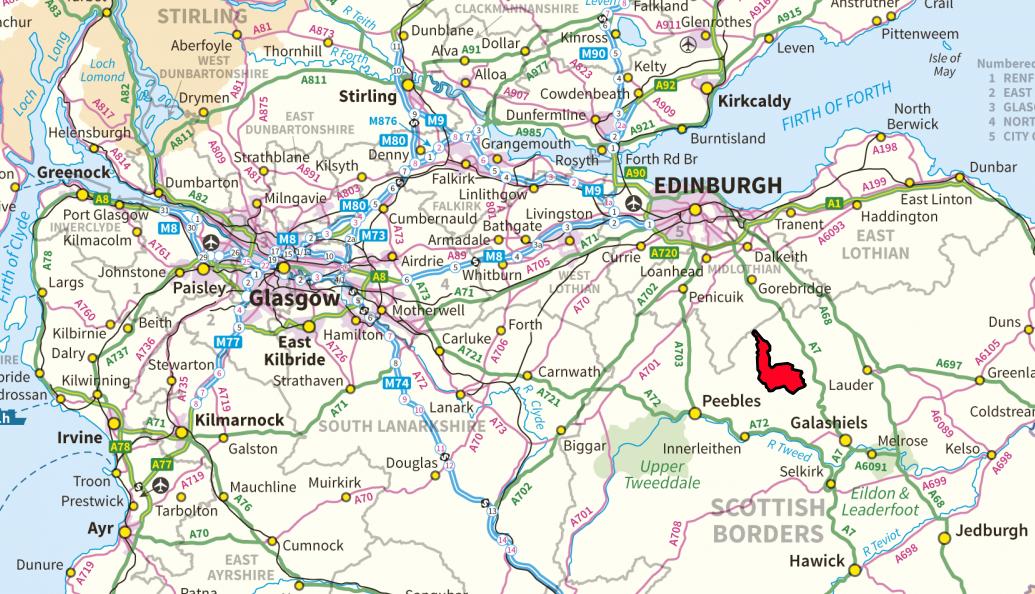
There’s also the recent surge in eagle persecution in the Scottish Borders (six reported incidents), four of which happened since Whitfield and Fielding wrote their report in November 2024:
Golden Eagle ‘Fred’ disappeared in an area managed for gamebird shooting in the Pentland Hills in January 2018 (his satellite tag transmitted from the North Sea a few days later – here).
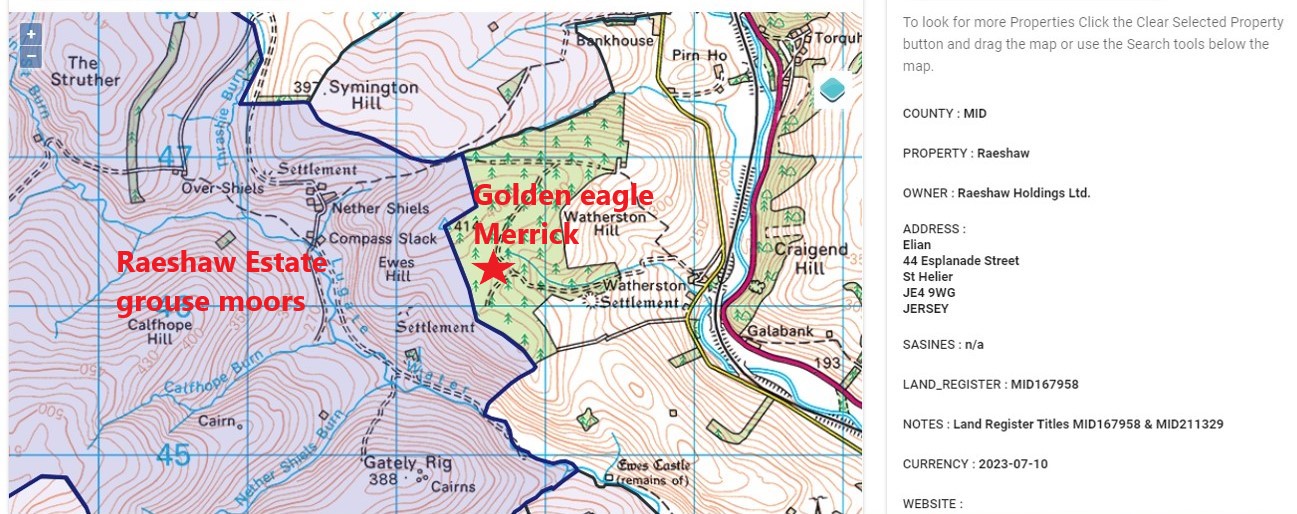
Golden Eagle ‘Merrick’ was shot and killed whilst she was sleeping in a tree next to a grouse moor in the Moorfoot Hills in October 2023 (see here).
Golden Eagles ‘Tarras’ and ‘Wren’ disappeared in an area managed for gamebird shooting near Langholm in August 2025 (see here).
A White-tailed Eagle ‘disappeared’ in the Moorfoot Hills area in November 2025 (here).
Golden Eagle ‘Hamlet’ was found with shotgun injuries next to a grouse moor in the Tweed Valley in February 2026 (here).
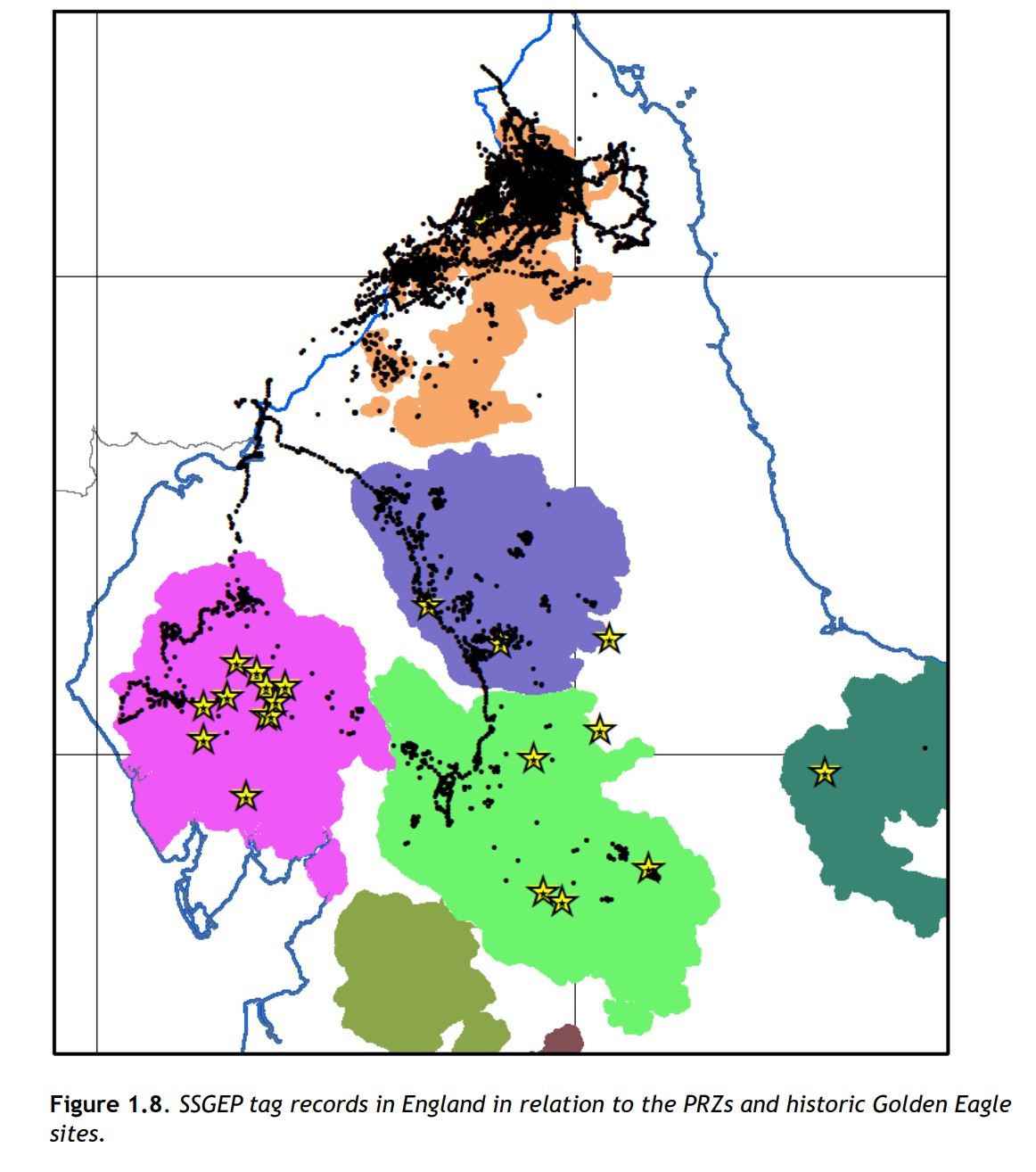
Golden Eagles from the South Scotland project are already exploring parts of northern England, as revealed by their satellite tracking data:
Some will argue that we should leave them to it and spend the money on species that need more help. Others will argue that until the persecution issue is addressed and resolved, a reinforcement/reintroduction project is an ethical misjudgment and may even contravene IUCN guidelines that require the cause of the species’ decline/extirpation to be addressed before reintroduction can take place. Others will argue that we should just get on with it and force the issue for the sake of urgently restoring biodiversity. Others will argue that the reintroduction of an apex predator will threaten livestock and thus livelihoods.
Many of these issues are considered in the report, in both the ecological and social science sections, and it is widely acknowledged that stakeholder participation in the process will be crucial.
From my personal perspective, I’d have been happier if the Government had also put up funding to establish a national, multi-agency response unit to investigate all offences that fall under the National Wildlife Crime Priorities, which includes raptor persecution.
Continuing to ignore the extent and impact of the issue, as successive Westminster governments have done, will inevitably lead to many of those England-based Golden Eagles being shot, poisoned, trapped, or bludgeoned to death, and nobody being held to account, and it needn’t be like that.
 Raptor Persecution UK